01
Minor in
Design Studies:
Learn design thinking and create solutions for the Common Good.
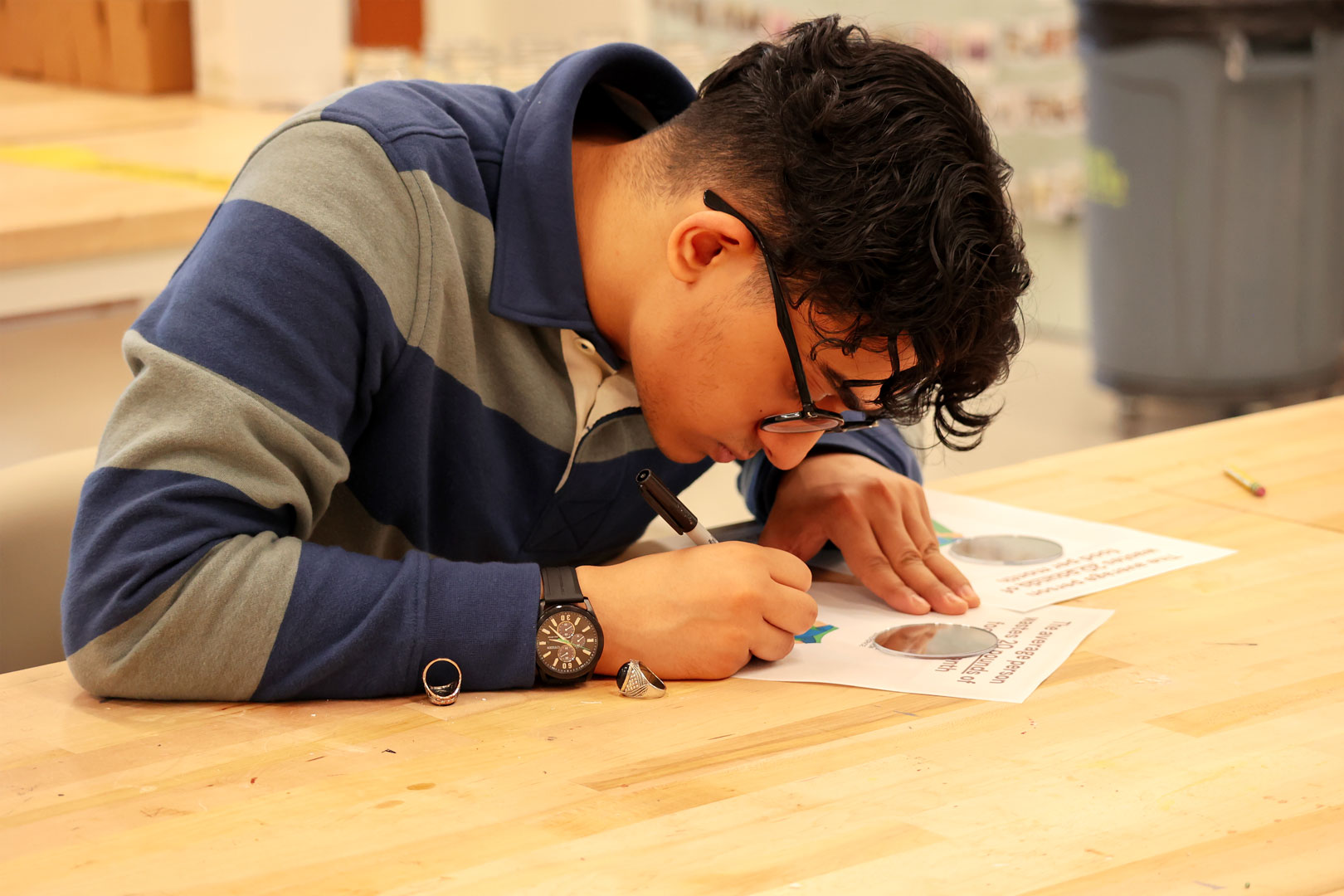
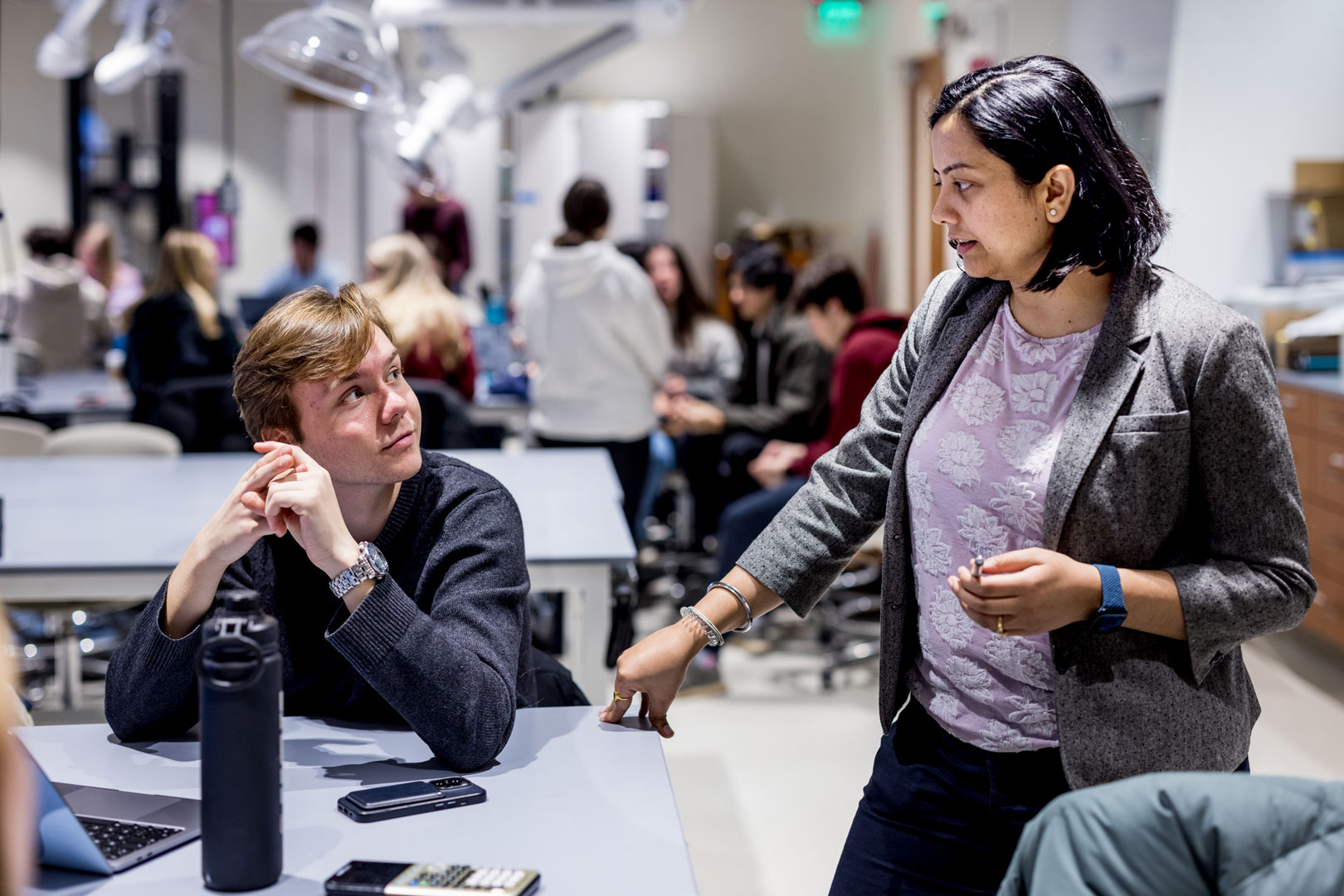
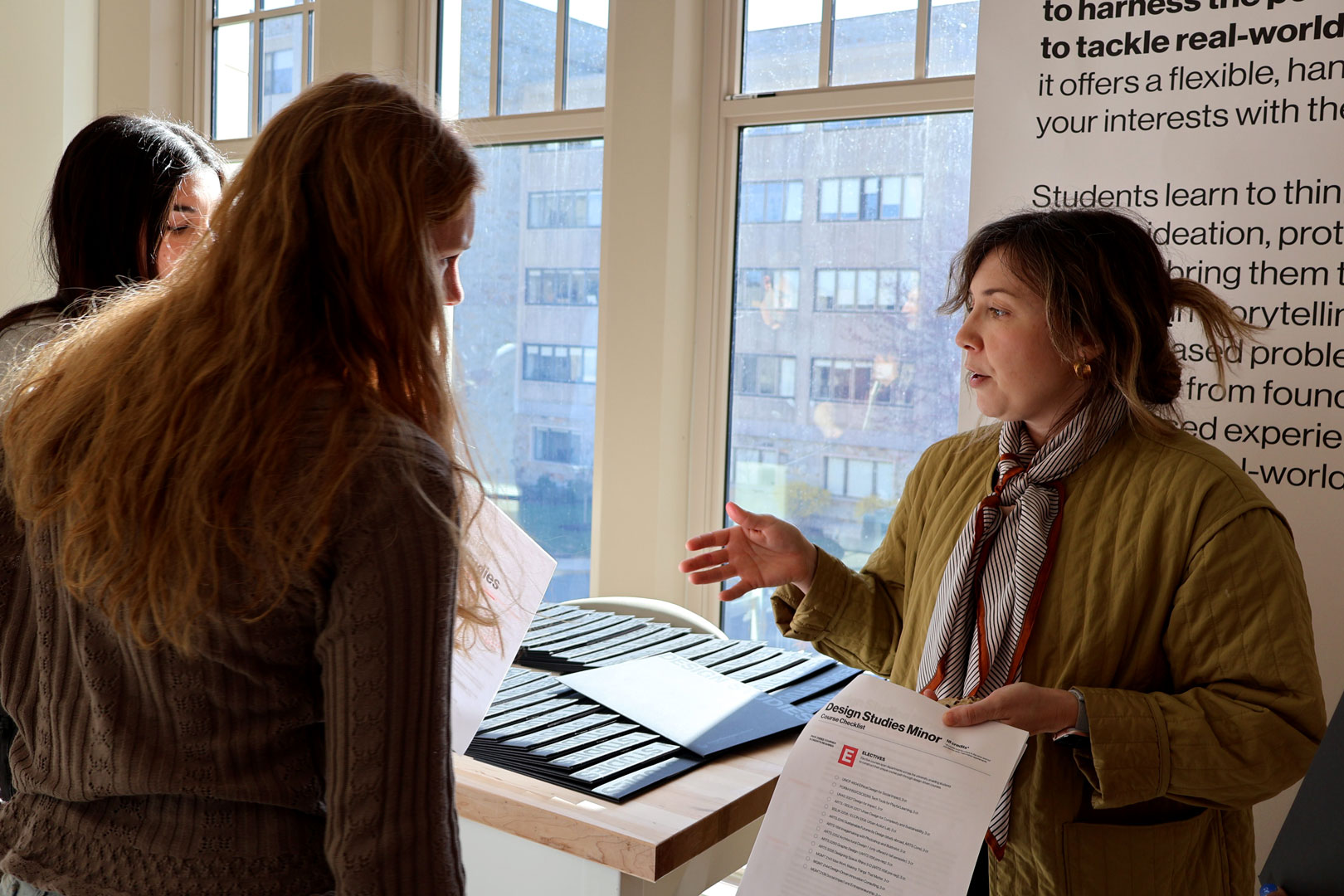
Courses complement every field of study, with the opportunity to complete the 18-credit Design Studies Minor.
Slide 1
Slide 2
Slide 3
Slide 4
Slide 5
Slide 6
Slide 7
Slide 1
Slide 2
Slide 3
Slide 4
Slide 5
Slide 6
Slide 7
Why Design Studies?
Courses for exploration &
deeper practice.
Courses for exploration.
Minor for deeper practice.

Design Studies gives every Boston College student access to design-thinking methods—and provides the structured academic home for completing the Design Minor.

Students can begin with an individual course or pursue the full 18-credit minor. Rooted in ethical reflection and the common good, both paths develop a practical way to understand people and systems, frame complex problems, explore possibilities, make ideas tangible, and learn through evidence.

Start with a course

Explore design thinking without changing a major.

complete the minor

Build a coherent, transcript-recognized course of study.

carry it forward

Graduate with projects, portfolio evidence, and a transferable process.

The Process
Five modes.
Continuous learning.
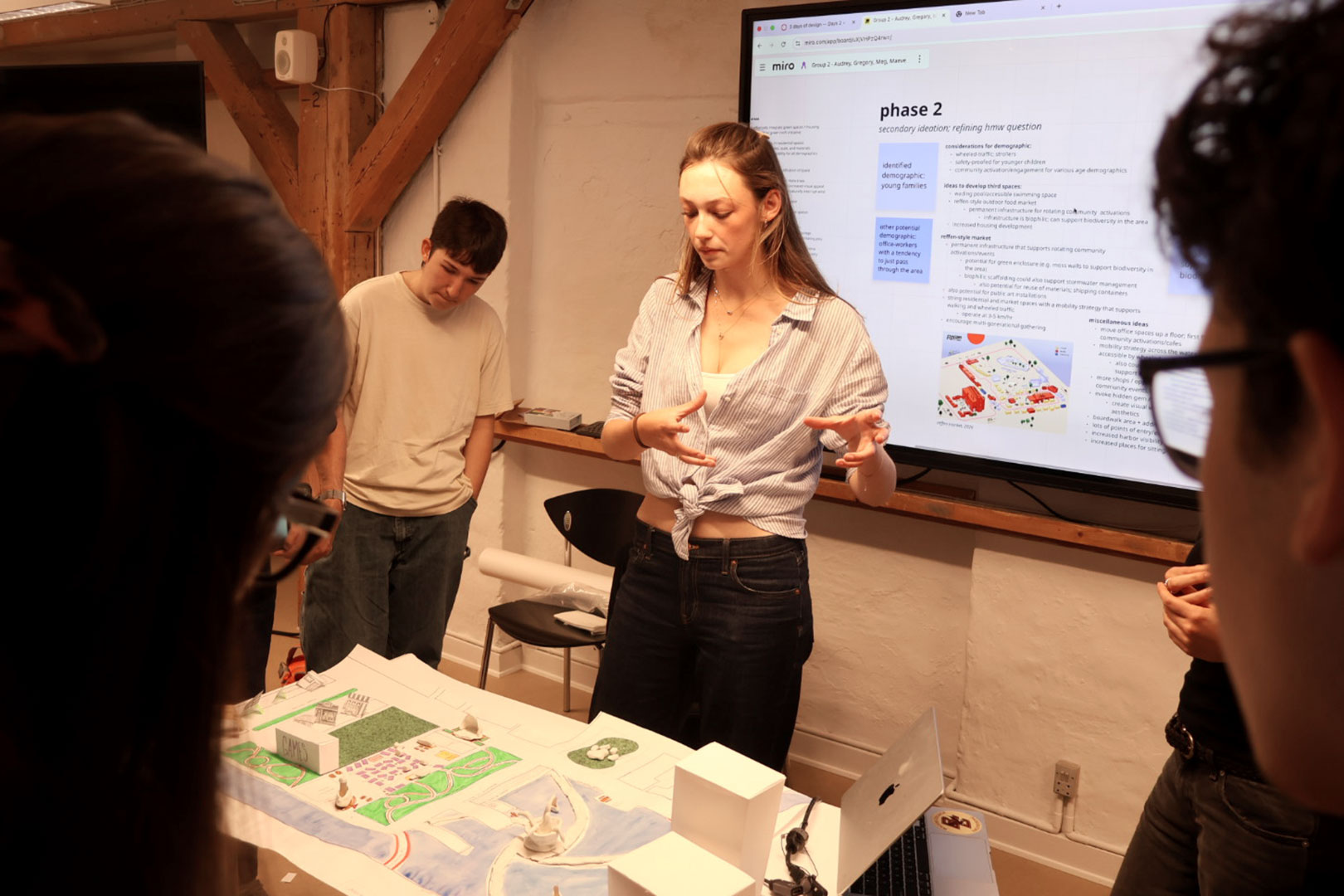
Students move back and forth between inquiry and action. Every test can reveal a better question; every decision is considered in relation to people, planet, consequences, and the common good.
01 / NOTICE

Empathize

Learn from people, context, lived experience, and connected systems.

02 / FOCUS

Frame

Synthesize findings into actionable insights and strategic opportunities.

03 / EXPAND

Imagine

Brainstorm diverse, wild, and innovative concepts without constraints.

04 / PROTOTYPE

Make

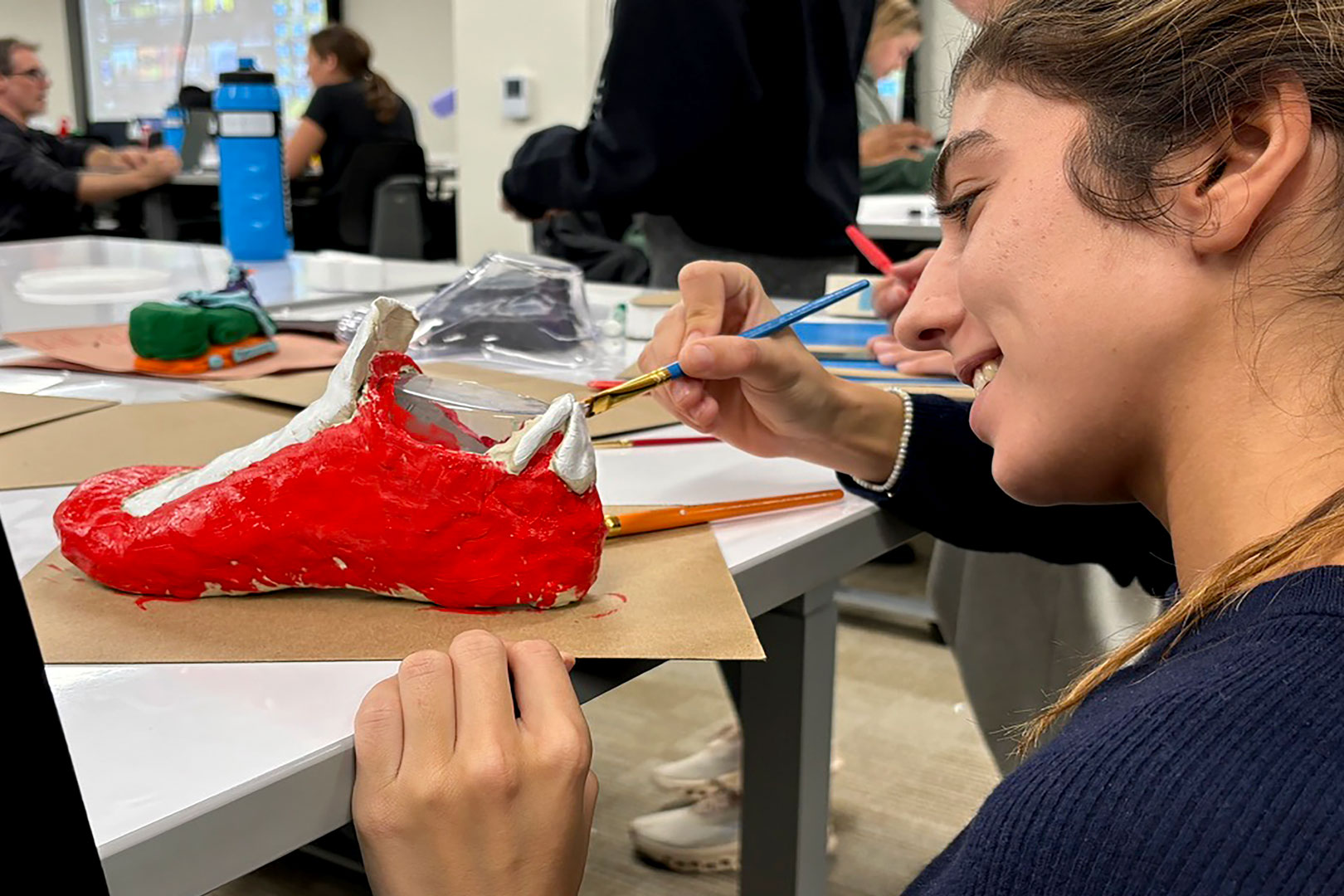
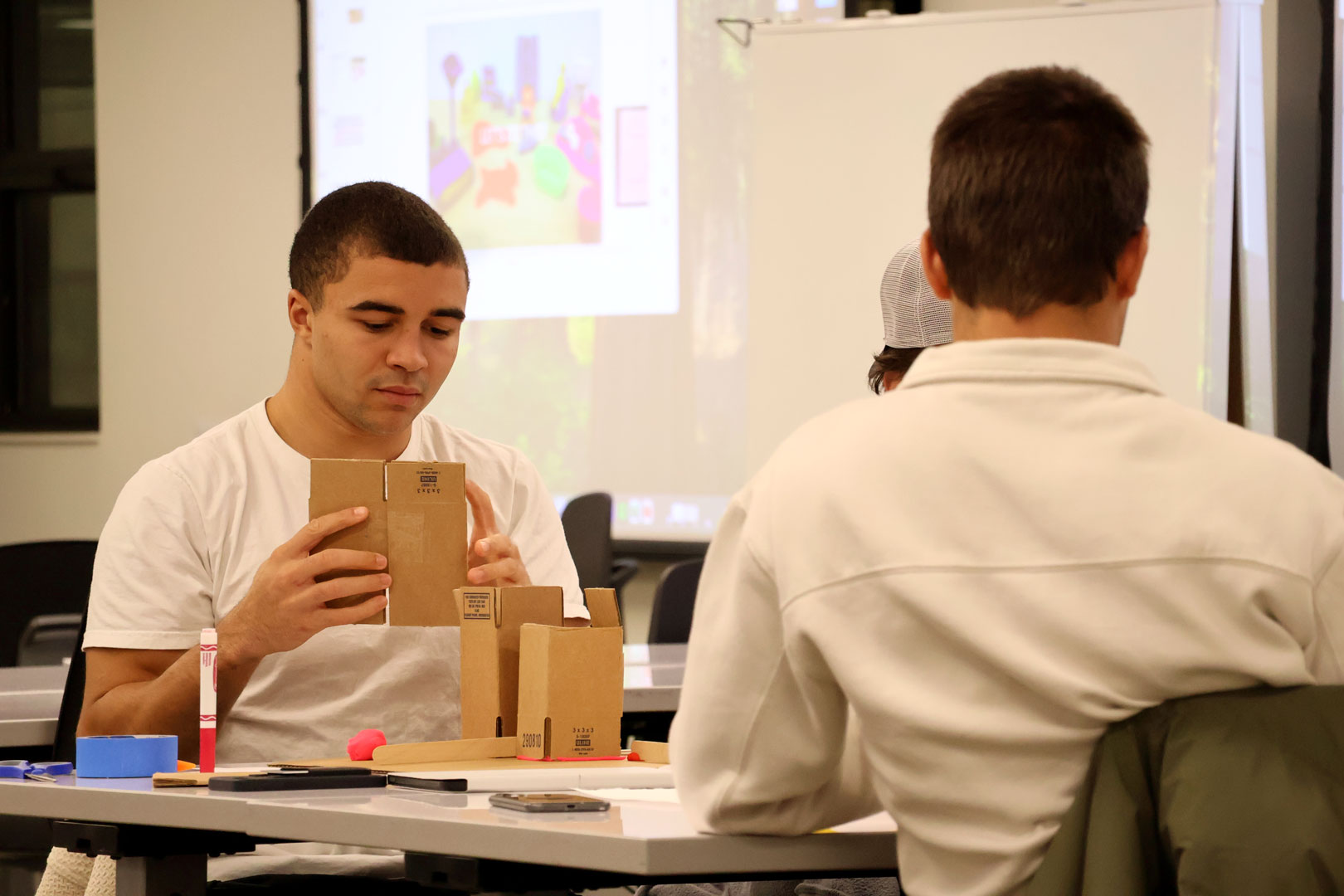
Build rapid, tangible representations of ideas to test and learn.

05 / PROTOTYPE

Test & reflect

Gather feedback, evaluate impact, and refine the solution iteratively.

01 / NOTICE

Observe

Learn from people, context, lived experience, and connected systems.

02 / FOCUS

Frame

Synthesize findings into actionable insights and strategic opportunities.

03 / EXPAND

Imagine

Brainstorm diverse, wild, and innovative concepts without constraints.

04 / PROTOTYPE

Make

Build rapid, tangible representations of ideas to test and learn.

05 / PROTOTYPE

Test & reflect

Gather feedback, evaluate impact, and refine the solution iteratively.

PEOPLE
PLANET
CONSEQUENCES
Design Minor
Foundation.
Practice.
Application.
The 18-credit minor combines a clear progression with electives from across Boston College, allowing students to connect design methods to their academic interests and future work.
01
Foundation
3 Credits
Learn core practices of observation, framing, ideation, prototyping, testing, and reflection.
3 Credits
02
Intermediate
3 Credits
Deepen the process through human-centered research, robotics, interaction design, visual storytelling, or engineering.
3 Credits
03
Advanced
3 Credits
Apply design to complex social, organizational, technological, or ecological challenges.
3 Credits
04
Electives
9 Credits
Shape the minor around sustainability, social impact, architecture, technology, visual communication, or entrepreneurship.
9 Credits
Courses & Syllabi
Courses that
make the process concrete.
Browse representative courses by level. Each course page can carry a current description, learning outcomes, faculty information, prerequisites, semester availability, and an accessible syllabus.
Electives
Graphic Design
This course is an immersive project-based introductory overview of concepts, contexts, tools, and techniques useful in solving a wide range of contemporary design problems, including logos, business cards, propaganda posters,...
3 CREDITS | 
Graphic Design
COURSE DESCRIPTION
This course is an immersive project-based introductory overview of concepts, contexts, tools, and techniques useful in solving a wide range of contemporary design problems, including logos, business cards, propaganda posters, multi-page documents, data visualizations, web page designs, app wireframes, and proposals for site-specific graphics. Beyond the necessary focus on software, including Adobe InDesign, Illustrator, and Photoshop, the course will incorporate discussion and application of typography, color theory and other 2D design concepts affecting how subject matter is perceived. Students will solve problems on behalf of themselves and choose one or more other clients whom they’ll strive to serve.
COURSE #
ARTS 2250
CREDITS
3
DETAILS
T 9:00 AM – 12:00 PM, Devlin Hall
Electives
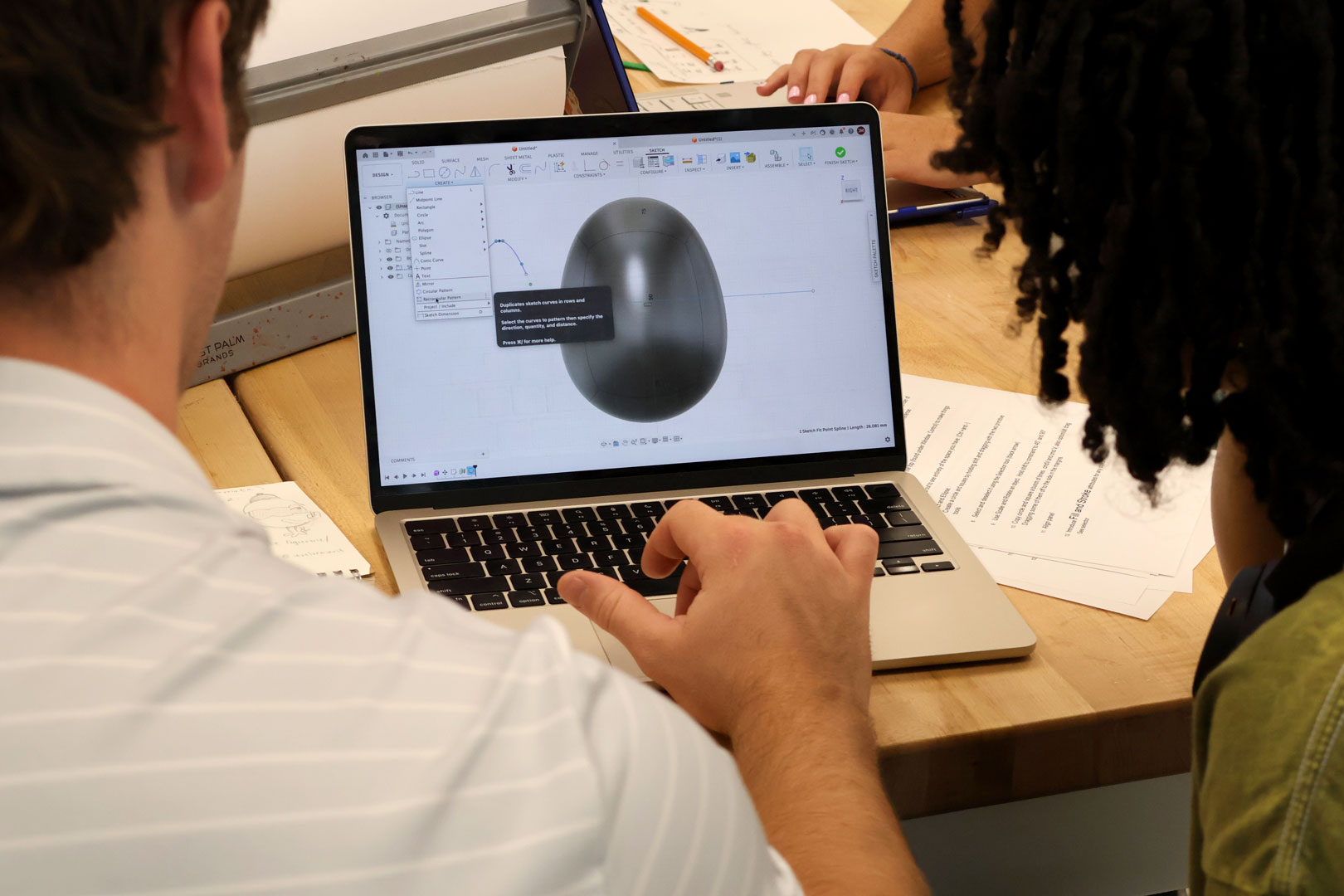
Designing Space: Rhino 3-D
The computer is one of myriad facilitators of the output of intellectual design ideas, but is by no means a creator of digital design content. This course begins with that...
3 CREDITS | 
Designing Space: Rhino 3-D
COURSE DESCRIPTION
The computer is one of myriad facilitators of the output of intellectual design ideas, but is by no means a creator of digital design content. This course begins with that notion and will work as a hybrid: equal parts digital skills workshop – where software skills are tested and evaluated -- and artist’s atelier – where design ideas, both articulated and ineffable, seek meaningful expression. Course content will draw from the fields of art, photography, film, graphic design, industrial design and architecture. In addition to works of two dimensions, this course will explore the translation from digital design to physical object.
COURSE #
ARTS 3335
CREDITS
3
DETAILS
Electives
Idea Work: Making Things That Matter
3 CREDITS | 
Idea Work: Making Things That Matter
COURSE DESCRIPTION
COURSE #
MGMT 2143
CREDITS
3
DETAILS
Not offered spring 2027
Electives
Design-Driven Innovation Consulting
In this course you will learn the fundamentals of design-driven innovation and how to consult and advise organizations that want to grow and differentiate themselves in the market. This includes...
3 CREDITS | 
Design-Driven Innovation Consulting
COURSE DESCRIPTION
In this course you will learn the fundamentals of design-driven innovation and how to consult and advise organizations that want to grow and differentiate themselves in the market. This includes a broad overview of the approach, process and methods of design thinking, agile product development and lean start-up.
COURSE #
MGMT 2144
CREDITS
3
DETAILS
M 4:30 PM – 6:50 PM, Fulton Hall
Electives
Social Impact and Entrepreneurship
Social entrepreneurship brings innovative market-based solutions to tackle problems in education, healthcare, housing, recycling, economic development, and sustainable water and energy supply. A commitment to measurable outcomes in line with...
3 CREDITS | 
Social Impact and Entrepreneurship
COURSE DESCRIPTION
Social entrepreneurship brings innovative market-based solutions to tackle problems in education, healthcare, housing, recycling, economic development, and sustainable water and energy supply. A commitment to measurable outcomes in line with mission needs to be combined with: customer orientation, design thinking, analysis of competitive landscapes, agility to adapt to external trends, and building strategic partnerships to leverage scarce resources.Open to students from all majors. Focuses on skill development. Includes case studies to evaluate social enterprises in US and internationally using a range of business models. Students will develop pitches and business plans for their own social venture ideas.
COURSE #
MGMT 2139
CREDITS
3
DETAILS
W 1:30 PM – 3:50 PM, Campion Hall
Foundation
Innovation Through Design Thinking
Would you like to be innovative in whatever you pursue? Innovation is about solving important and complex problems to create value for the greater good. Innovating through design thinking is...
3 CREDITS | 
Innovation Through Design Thinking
COURSE DESCRIPTION
Would you like to be innovative in whatever you pursue? Innovation is about solving important and complex problems to create value for the greater good. Innovating through design thinking is a structured, human-centered process for creatively solving problems, which can be adopted by anyone. In this foundational course we will introduce the mindset, process and methods at the core of design thinking. Students will see inspiring case studies, hear from cutting edge practitioners, and work on a project to internalize this learning. Students will discover design thinking is a practical toolkit that helps them reliably innovate in the face of changing social needs, business disruptions, and technology shifts.
COURSE #
UNAS 1025
ARTS 1125
ENGR 1025
CREDITS
3
DETAILS
T/Th 6:00 PM – 7:30 PM, Hayden Hall
T/Th 6:00 PM – 7:30 PM, Service Building
Foundation
Innovation Through Engineering Design
Would you like to harness your agency and engineering practice to help solve complex sociotechnical problems? "Innovation Through Engineering Design is about developing skills and practices to work on important...
3 CREDITS | 
Innovation Through Engineering Design
COURSE DESCRIPTION
Would you like to harness your agency and engineering practice to help solve complex sociotechnical problems? "Innovation Through Engineering Design is about developing skills and practices to work on important and complex problems for the common good. Engineering design involves working through a structured framework and practices to creatively understand, work on, and iterate on problems, which can be learned and practiced by anyone. In this foundational course, we will introduce the framework, mindset, processes, and methods at the core of Engineering Design and Design Thinking. You will see inspiring case studies, practice active reflection on your learning, and work in teams on a variety of projects to internalize this learning.
COURSE #
ENGR 1026
CREDITS
3
DETAILS
Not offered in Spring 2027
Foundation
Making the Modern World: Design, Ethics, and Engineering
Together we will consider how engineers and other stakeholders navigate risks related to industrial and environmental disasters, balance financial, technological, and regulatory pressures associated with complex socio-technical problems, and negotiate...
3 CREDITS | 
Making the Modern World: Design, Ethics, and Engineering
COURSE DESCRIPTION
Together we will consider how engineers and other stakeholders navigate risks related to industrial and environmental disasters, balance financial, technological, and regulatory pressures associated with complex socio-technical problems, and negotiate technical and political liabilities surrounding artificial intelligence, surveillance, and climate adaptation. Engineering systems present pressing technical, ethical, and moral problems that we must grapple with as engaged global citizens. In this course, students will explore the social, cultural, and institutional history of engineering, learn foundational skills in quantitative analysis of real-world engineering designs, and understand the political, environmental, economic, and ethical tradeoffs associated with building the modern world. Students will collaborate on group design projects based on human-centered engineering.
COURSE #
ENGR 1801
CREDITS
3
DETAILS
Not offered in Spring 2027
Intermediate
Introduction to Human Centered Engineering
In this course, we will learn about and practice engineering methods to tackle design problems through a human-centered lens. These methods include introductory work with: mathematical models, statistics, physical prototyping,...
3 CREDITS | 
Introduction to Human Centered Engineering
COURSE DESCRIPTION
In this course, we will learn about and practice engineering methods to tackle design problems through a human-centered lens. These methods include introductory work with: mathematical models, statistics, physical prototyping, computer-aided design, decision-making approaches, and observation and interview techniques. We will learn how these methods can be employed while working on a design problem, including problem formulation, data analysis, design trade-offs, concept selection, and design deployment. At the end of this course, we will have a working understanding of how human-centered engineers think and work.
COURSE #
ENGR 1101
CREDITS
3
DETAILS
M/W 10:00 AM – 11:15 AM, Hayden Hall (Lecture)
F 10:00 AM – 11:50 AM, Hayden Hall (Lab)

M/W 1:00 PM – 2:15 PM, Hayden Hall (Lecture)
F 1:00 PM – 2:50 PM, Hayden Hall (Lab)
Intermediate
Physical Computing: Interactive Art, Robotics, and Tech for Good
Low-cost microcontrollers, sensors, and computing devices like the Raspberry Pi make it possible to create technical projects that humans can physically interact with. This course assumes no prior programming experience...
3 CREDITS | 
Physical Computing: Interactive Art, Robotics, and Tech for Good
COURSE DESCRIPTION
Low-cost microcontrollers, sensors, and computing devices like the Raspberry Pi make it possible to create technical projects that humans can physically interact with. This course assumes no prior programming experience but will progress quickly through block-based MakeCode programming, then CircuitPython programming so that all students have coding knowledge necessary to create hardware projects. Students will purchase an amount of hardware and tools similar to the cost of books in a standard course, and we’ll use these parts to build a series of projects that control lights, read sensors, produce sound, respond to touch and app control, capture camera images, and more. We’ll also build a wheel-based robot, and students will have an opportunity to create and present several original projects and share their work with classmates. This course was formerly numbered: ISYS2170.
COURSE #
UNAS 2175
BZAN 2175
CREDITS
3
DETAILS
W 4:30 PM – 6:50 PM, Hayden Hall
Intermediate
Information and Communication Design
This studio-based undergraduate course focuses on the theory and practice of designing information graphics and visual systems with purpose. Building on design thinking methodologies and core principles of design, students...
3 CREDITS | 
Information and Communication Design
COURSE DESCRIPTION
This studio-based undergraduate course focuses on the theory and practice of designing information graphics and visual systems with purpose. Building on design thinking methodologies and core principles of design, students investigate audience needs, contexts of use, and levels of visual literacy to create effective and impactful visual communication for applications such as signage, exhibitions, wayfinding, instructional materials, and public communication. Emphasis is placed on visual hierarchy, typography, layout, accessibility, narrative, and iterative design using manual and digital tools. This course was previously titled: "Data Visual Communication Design". Prerequisite: (UNAS1025 or ARTS1125 or ENGR1025) or ENGR1026 or ENGR1801 or HIST1627).
COURSE #
UNAS 2205
CREDITS
3
DETAILS
Not offered spring 2027
Apply for a Minor in Design Studies
Curriculum, courses, student outcomes and how to apply.
Apply for a Minor in Design Studies
Curriculum, courses, student outcomes and how to apply.
Student Voices
Design-driven processes
changing how students see.
Hear from students helping shape the Design Commons Collective.
Leadership
Program Leadership
Hear from students helping shape the Design Commons Collective.
Apply
Bring a major. Add a process for problems without obvious answers.
Browse representative courses by level. Each course page can carry a current description, learning outcomes, faculty information, prerequisites, semester availability, and an accessible syllabus.