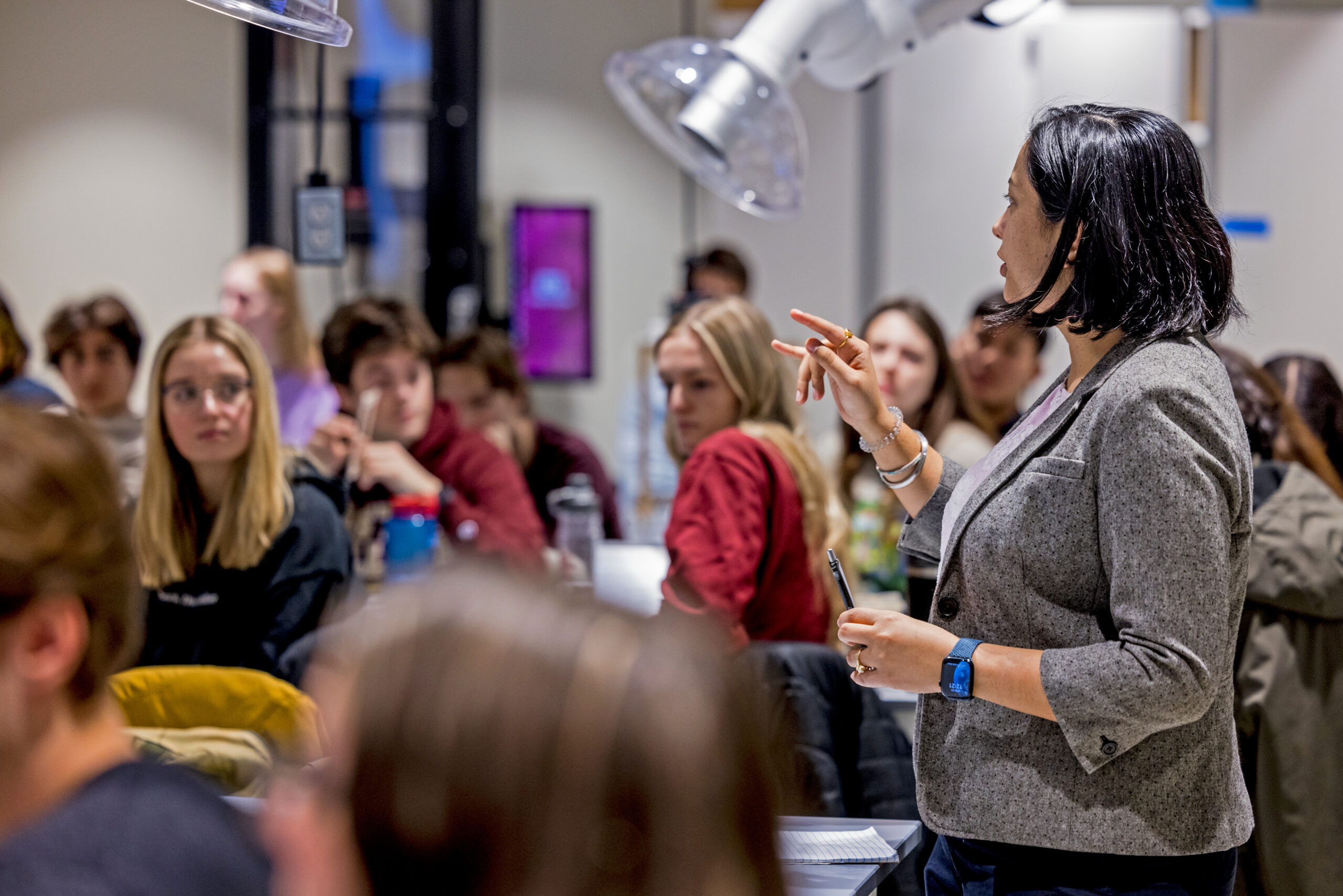
Human-centered and participatory methods help researchers understand stakeholder perspectives, frame consequential questions, co-create possibilities and translate evidence into responsible action.
02
Design in Research
Design in research.
Design methods that complement research.
Human-centered and participatory methods help researchers understand stakeholder perspectives, frame consequential questions, co-create possibilities and translate evidence into responsible action.
01
Beyond Research about people
Research designed with people.
Research designed with people.
Rigorous research becomes more relevant when the people and communities affected help shape the inquiry.
Design in Research connects disciplinary expertise with human-centered design, participatory co-creation and ethical reflection. Researchers, students and community partners work together to define questions, generate insight, test possibilities and consider consequences.
People
Start with lived experience.
Purpose
Address the right problem.
Systems
See interdependence.
Learning
Iterate with evidence.
02
A Research Process
Five moves. Shared learning.
Students move back and forth between inquiry and action. Every test can reveal a better question; every decision is considered in relation to people, planet, consequences, and the common good.
01 / NOTICE
Co-frame
Co-design the research question with people who understand its lived context.
02 / FOCUS
Learn in context
Combine disciplinary evidence with observation, dialogue and experience.
03 / EXPAND
Make sense
Synthesize patterns, tensions, systems and opportunities collaboratively.
04 / PROTOTYPE
Co-create & test
Make possibilities tangible and invite evidence before committing.
05 / PROTOTYPE
Return & act
Share findings, assess consequences and shape responsible next steps.
WITH STAKEHOLDERS THROUGHOUT – RETURN, REFRAME, ITERATE
03
Co-Creation
Expertise is distributed.
With - not merely for - communities
People affected by research bring knowledge that cannot be replaced by observation from a distance.
01
Inclusion
Treat communities as partners in the work, not audiences for a finished answer.
02
Collaboration
Use workshops and shared activities where participants contribute their knowledge and perspectives.
03
Empowerment
Treat communities as partners in the work, not audiences for a finished answer.
04
Ethical Research
Consider consequences before action.
Consider consequences before action.
Responsibility is part of the method.
Design in Research connects disciplinary expertise with human-centered design, participatory co-creation and ethical reflection. Researchers, students and community partners work together to define questions, generate insight, test possibilities and consider consequences.
informed consent
Ensure voluntary participation and genuine understanding.
Privacy
Protect identities and sensitive information.
Equity
Address representation and power imbalances.
Minimize harm
Identify and mitigate risk throughout the work.
BC Standards
Align with IRB guidance and applicable regulations.
05
Get Involved
Bring a question. Build the work together.
Design in Research supports multiple ways to participate—from integrating design into an existing study to joining a project or developing an equitable community partnership.